Blog
The Trade That Taught Me to Size From the Stop
I knew the position sizing formula for years before I used it. It took one oversized loss, on a setup I still think was right, to make it a habit.
I could recite the position sizing formula long before I followed it. Account times risk percentage gives the risk budget; entry minus stop gives the risk per share; divide one by the other. I had written it down. I had a calculator bookmarked. And for a long time I sized positions by a different method entirely, which was how confident I felt.
This post is about the trade that ended that, and what I do instead now.
The setup I still think was right
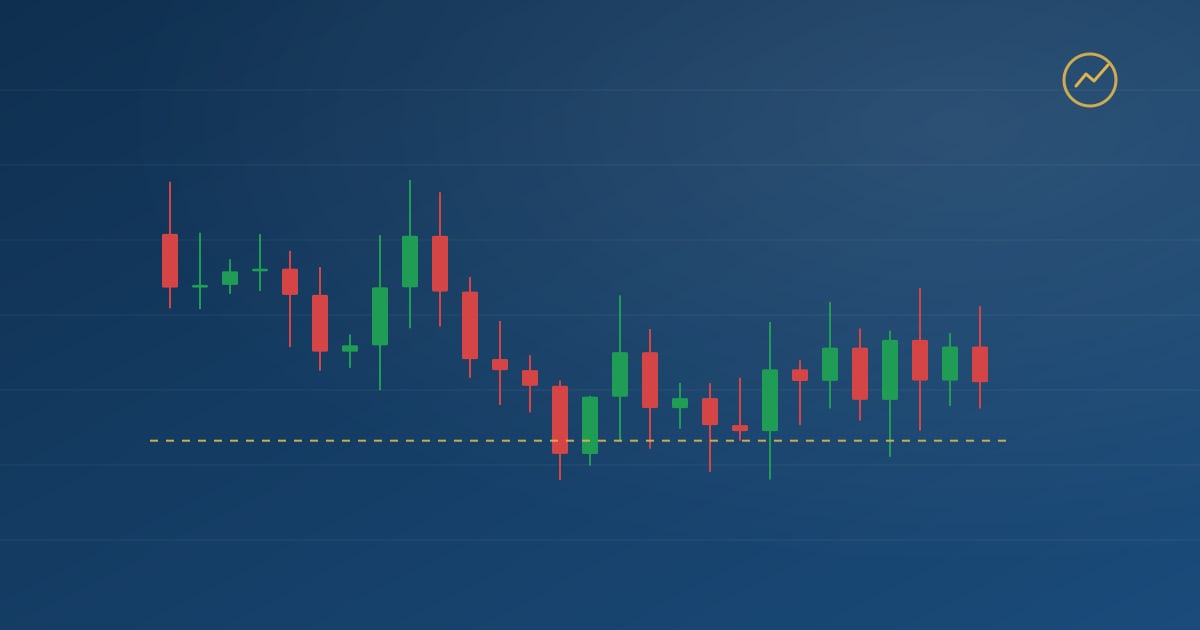
The stock was a mid-cap I had followed for months. It had pulled back to a level that had held twice before, volume on the pullback had dried up, and the daily candle that closed back above the level was as clean a reversal as you could draw. I had read this exact structure a hundred times in the charts of other people’s trades. I was sure.
So I bought more than usual. Not recklessly, I told myself. Just a bit more, because the setup deserved it.
The stop went below the level, where it belonged. That part I did correctly. The problem was that the distance from my entry to that stop was wide, because the level was a zone rather than a line and I had given it room. Wide stop, large position. If you know the arithmetic, you already know what that combination means. I did too, in theory.
Two sessions later a sector-wide selloff took the level out on a gap. My stop filled well below where I had placed it. The loss was a bit over three times what I would normally accept on one trade.
What I got wrong, specifically
The setup was fine. I would take it again today. The analysis did not fail.
What failed was that I had let two things vary at once. The stop distance was set by the chart, as it should be. The share count was set by my confidence, which it should never be. The result was a risk figure I had not chosen and had not even calculated. I found out what I was risking when I lost it.
Here is the uncomfortable part. If I had sized that trade correctly, the gap would still have happened, the stop would still have been blown through, and I would have lost roughly one and a half times my planned risk instead of three. It would have been an ordinary bad day. The difference between a bad day and a bad month was a decision I made in about four seconds while feeling good about a chart.
What changed afterwards
The fix was not learning the formula. I knew the formula. The fix was making the formula the only route to a share count.
I now do it in this order, every time, and the order is the point:
- Find the level, and decide where the trade is wrong. That gives the stop.
- Measure the distance from the intended entry to that stop.
- Divide the fixed risk budget by that distance. That gives the share count.
- Enter the share count the calculation produced, not a rounder or braver number.
If step three produces a position that feels too small for a setup I love, that is the setup telling me its stop is wide. A wide stop and a small position is the correct response to that information. A wide stop and a large position is the trade I wrote this post about.
The other change was mechanical. I stopped doing the arithmetic in my head. The position size calculator on this site exists because I wanted something that would refuse to let me skip the step. Typing the stop into a box before typing the share count turns out to be most of the discipline.
The lesson in one line
Analysis decides whether you take the trade. The stop decides how big it is. The day I stopped letting the first one influence the second is the day my losses became boring, and boring losses are the whole objective.
If you want the full method rather than the story, the risk management guide covers the arithmetic from first principles, and support and resistance covers how to find the level that gives you the stop in the first place.